

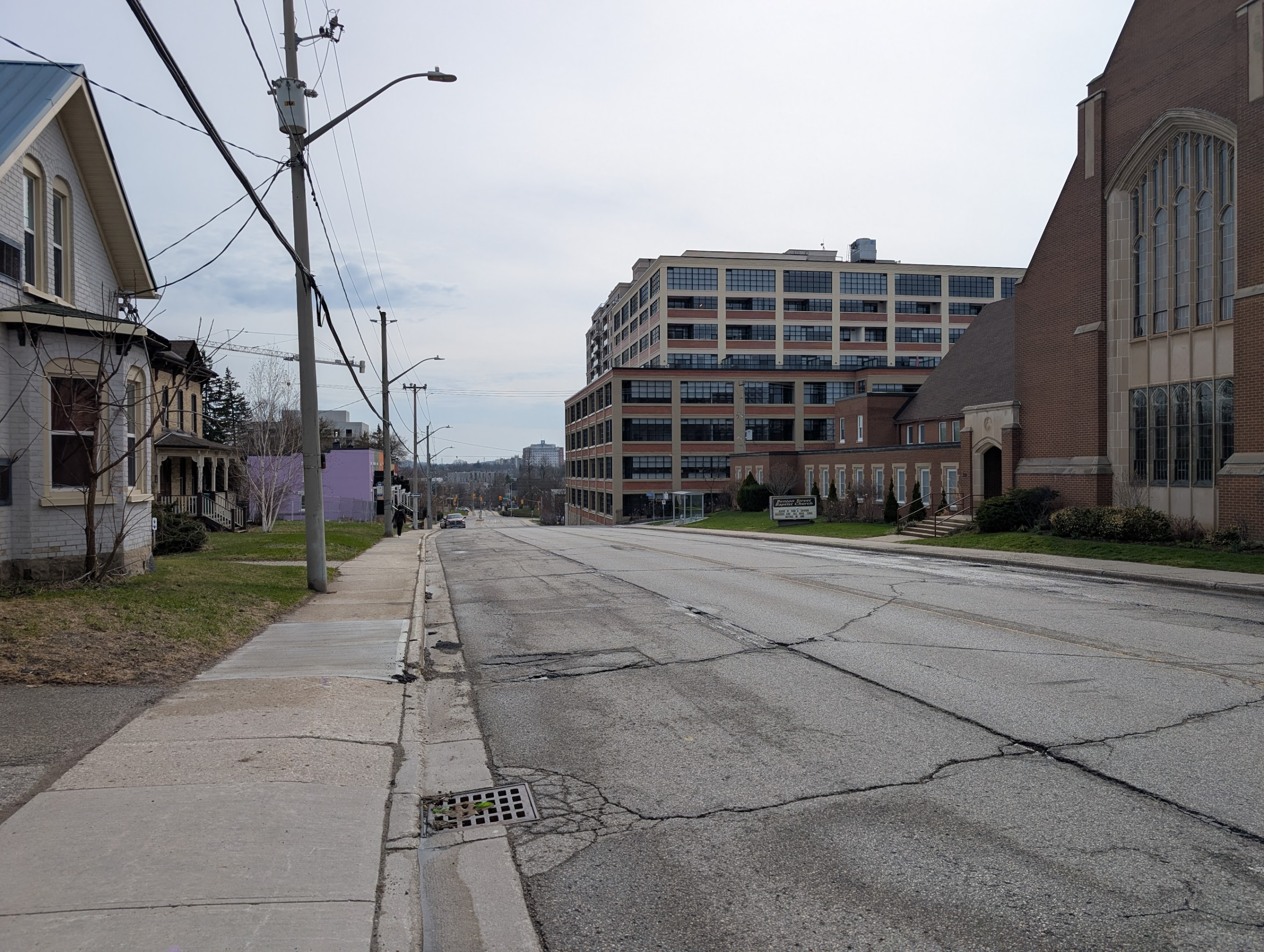
On November 27, 2025, the Ontario government passed Bill 60, introducing significant amendments to the Highway Traffic Act that fundamentally changed how municipalities manage bicycle lanes. The core of the amendment creates new restrictions on a municipality’s authority to reduce “motor vehicle lanes” in favor of active transportation infrastructure.
We submitted a response to the provincial government outlining our concerns regarding the impact on Waterloo Region’s active transportation goals, read the letter below.

We are CycleWR, a group that suggests improvements to, and rallies support for, the cycling projects proposed by the various municipalities in Waterloo Region.
Dear Premier Ford and Minister Sarkaria,
We are writing today to illustrate the damage that Bill 60 is causing in the Region of Waterloo – but also to suggest a way forward that we believe will achieve your primary goal (avoiding major traffic disruptions) while allowing more flexibility for municipalities to achieve their goals.
Multiple studies have shown that properly designed cycling facilities make all three traffic modes – driving, cycling and walking – safer. This is the key reason why Bill 60 has generated such strong opposition, as it forbids even well designed cycling improvements if that in any way reduces driving lanes. There is a less contentious way to achieve your primary goal.
Toronto’s traffic situation is by far the worst in the province. The situation is very different in other municipalities, such as Waterloo Region. Here there are a substantial number of “overbuilt” roads where the number of car lanes is clearly excessive for the volume of traffic on the street.
How do we define “overbuilt”? There are multiple four lane streets in Waterloo Region with perfectly acceptable level of service, carrying 15-20,000 cars per day on a non-commercial street, or up to 15,000 cars per day on a fully commercial street. We should not need four lanes in these scenarios, unless traffic volumes are expected to significantly exceed those levels. Check with your engineers – they should agree.
Here are three of the clearest examples of overbuilt roads in our Region that (with removal of one or two car lanes) have potential for high value cycling facilities. The priority rankings are from the CycleWR Cycling Route Effectiveness Model (CREM).
| Route | City | Priority | # Lanes | Cars Per Day | Street Type |
| Concession St, Ainslie to Centre | Cambridge | #1 of 108 in Cambridge | 4 | 14-15,000 | Residential |
| Frederick St, Weber to Lancaster | Kitchener | #6 of 166 in Kitchener | 4 | 10-12,000 | Commercial |
| Dixon St, Floral to Eckert | Kitchener | #36 of 166 in Kitchener | 4 | 1-4,000 | Residential |
Prior to Bill 60, there were plans for new cycling facilities on Frederick and Dixon. The Frederick route has been cancelled, and Kitchener is evaluating if Dixon can be modified to comply with Bill 60. There is no way to put a cycling facility on Concession Street without removing a car lane or both sidewalks, given the topography of that section.
We understand the desire to avoid major traffic disruptions, especially in Toronto. Many people who cycle actually drive more than they cycle – they care about both modes of travel. However, Bill 60 is a sledgehammer that simply forbids many perfectly reasonable changes that would allow safer cycling infrastructure without significant impact to people when they drive. For Dixon Street in particular, we submit that any time the City spends on revising their plan to maintain the four current car lanes is a complete waste of taxpayer dollars – something the Premier claimed to care about when he first got into politics. In addition to extra staff time, the likely solution (adding a Multi-Use Path outside the existing four lanes) would add capital costs and permanent extra maintenance cost.
We ask you to spend a little time to add some nuance to the bills you have passed. There is a simple improvement that you could make. When Bill 212 was passed, the Minister said you were going to consult with the municipalities to come up with some reasonable criteria to decide when removing a car lane would be acceptable.
That wouldn’t take very long. A simple two dimensional matrix of the minimum number of car lanes required, based on the average annual daily traffic and the type of road (mainly residential vs partially commercial vs fully commercial) would likely be sufficient. The criteria we suggest above would likely work – but we do recommend you consult with your municipal counterparts, to make sure all parties agree to the criteria.
Any reasonable criteria would allow lane reductions on these three streets and many more across the Province, that are currently prohibited under Bill 60 – while still achieving your primary goal to prevent lane reductions where that would significantly impact traffic flow.
CycleWR Board Members:
Aldo Culquicondor
Klas Bockasten
Janice Jim
Brian Maloney
Priya Soundararajan
Tom Strickland
Zac Young